

- Avoid recalculation: Cached results are returned instantly.
- Reduce datastore scans: Queries do not need to access the underlying datastore.
- Optimize repeated queries: Dashboards and reports that reuse the same measures benefit the most.
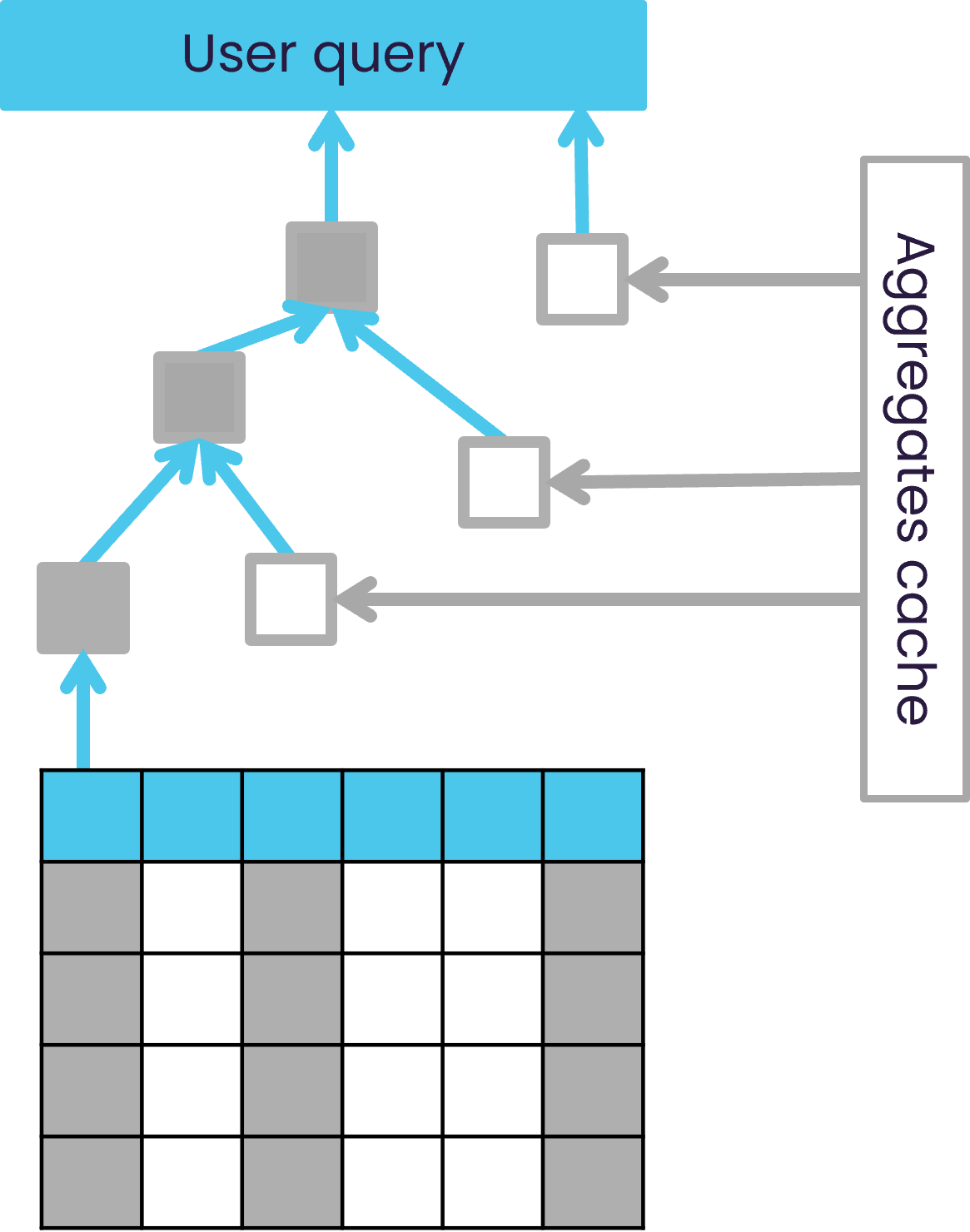
How can the aggregates cache be modified?
- Enable caching: Activate the aggregates cache in the cube configuration.
- Set cache size: Define the maximum number of measure-location pairs stored.
- Choose caching strategy:
- Cache all measures.
- Cache only selected measures.
- Exclude specific measures from caching.
- Clear or resize cache: Adjust cache behavior dynamically based on workload.
When to use the aggregates cache
The aggregates cache is most effective when query patterns are predictable, and data loading is infrequent. It is less useful in real-time environments where data changes often.Recommended scenarios
- One-off data loading: Data is loaded once and queried repeatedly.
- Infrequent intraday updates: Cache remains valid for most queries.
- High dashboard reuse: Multiple users run similar queries.
Avoid using the cache when
- Real-time data loading: Frequent updates clear the cache, reducing its benefit.
- Highly dynamic queries: If queries rarely repeat, caching adds little value.